FAQS
Find answers to the most common questions about shipping, orders, returns and our products.
Shipping & Customer Service
Within Germany, delivery usually takes 3-5 business days via DHL. Shipping is free for orders over €75.
Shipping within Germany costs €4.95. Orders over €75 qualify for free shipping. Delivery is handled by DHL.
Yes! Once your order has been shipped, you will receive a DHL tracking number by email. You can use it to track your delivery status online at any time.
We currently ship within Germany only. Deliveries to other countries are not possible at the moment.
You can reach us by email at info@uveekai.com. We typically respond within 24 hours on business days.
Orders
We accept credit cards (Visa, Mastercard, American Express), PayPal, Apple Pay, Google Pay and Klarna (instant transfer, invoice, instalments). All payments are processed securely via Stripe.
As long as your order hasn't been shipped yet, we can make changes. Please contact us as soon as possible by email at info@uveekai.com.
Yes, you will receive an automatic confirmation email with all details immediately after placing your order. Check your spam folder if the email doesn't arrive.
Customer Account
No, you can also order as a guest. However, we recommend creating an account so you can track your orders, use your wishlist and check out faster on future orders.
Click "My Account" in the top right corner and select "Register". Alternatively, an account is automatically created for you during the checkout process.
Click "Forgot password?" on the login page and enter your email address. You will receive a link to reset your password.
Products
All our products are certified UPF 80 to UV STANDARD 801, tested at the Hohenstein Institute (certificates 24.1.10.0433-80-1 and 24.1.10.0434-80-1). Unlike EN 13758-1 and AS/NZS 4399, which measure only dry, unstretched fabric in new condition, UV STANDARD 801 also measures wet, stretched fabric (Source: German Federal Office for Radiation Protection (BfS)). UPF 80 means the fabric extends the natural self-protection time of the covered skin by a factor of 80. Please inform yourself about how to protect yourself in the sun, for example at the German Federal Office for Radiation Protection (Source: German Federal Office for Radiation Protection (BfS)). Uncovered skin such as face and hands still needs sunscreen.
UPF stands for Ultraviolet Protection Factor — the UV protection factor for textiles (UPF applies to clothing, SPF to sunscreen). It indicates how much longer you can stay in the sun wearing the garment without getting sunburnt (Source: German Federal Office for Radiation Protection (BfS)). With UPF 80, mathematically only about one eightieth of the sunburn-effective UV radiation passes through the fabric. UPF 80 is the highest of the certification levels in UV STANDARD 801 (UPF 10, 15, 20, 30, 40, 60 and 80); the certificate states the lowest value measured under all test conditions (Source: uvstandard801.com).
Wash your UVEEKAI clothing at a maximum of 30 °C on a gentle cycle, ideally inside out with the zip closed, and without fabric softener. Do not bleach, do not iron, do not dry-clean and do not tumble dry — let it air-dry, ideally in the shade. UV protection is maintained with proper care.
No. The UV protection of our fabrics is integrated into the weave structure, not applied as a coating. It therefore remains fully intact even after many washes – unlike chemically treated fabrics.
Use our detailed size guide on each product page. Measure your body and compare the measurements with our chart. If you're between two sizes, we recommend choosing the larger size for more comfort during athletic activities.
Our products have a regular fit with a close-to-body cut. For full UV protection and freedom of movement, the fabric should rest comfortably — not tightly — against the skin. Between two sizes? Choose the larger one.
Technical Knowledge
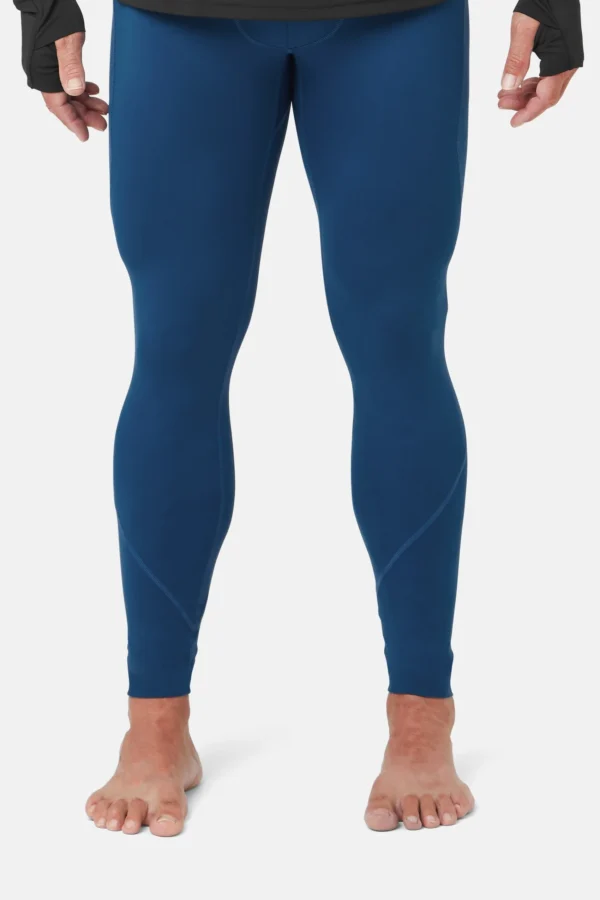
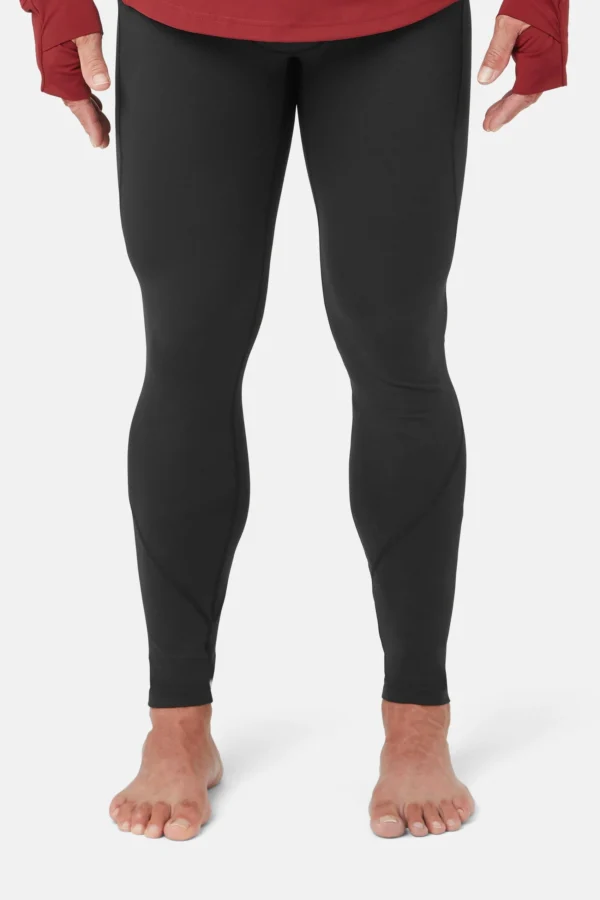
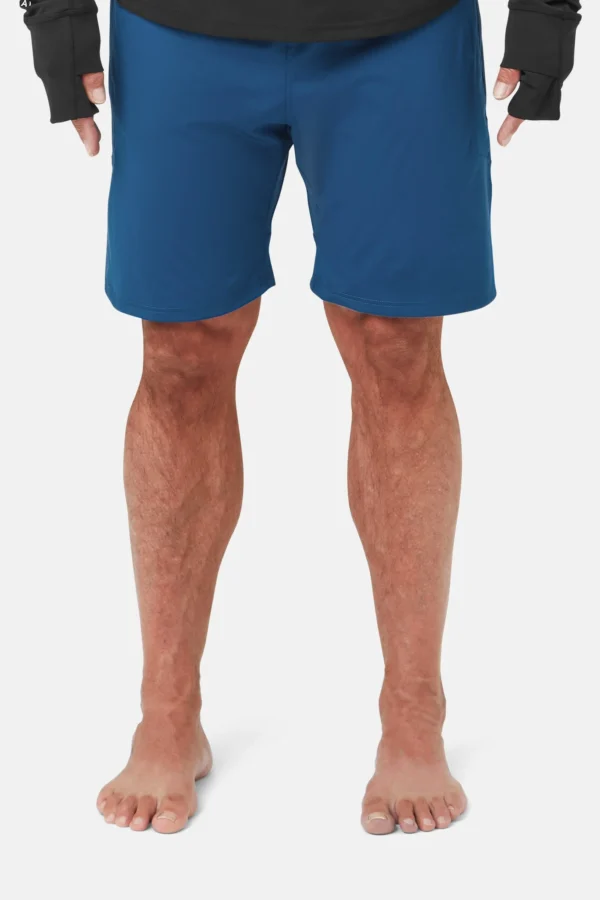
We use two fabrics: UV-Tech 168 (82 % polyester, 18 % elastane) for long-sleeve shirts, hooded shirts and men's swim shorts, and UV-Tech 231 (74 % polyamide, 26 % elastane) for leggings, long pants and women's swim shorts. Both are developed for UV protection and active use: lightweight, breathable and quick-drying.
Yes! Our swim shorts and long-sleeve shirts are made for water activities. They dry quickly, and UV STANDARD 801 also tests the UV protection on wet fabric, so the certified UPF 80 applies in the water too. The material is resistant to chlorine and saltwater.
UV protection knowledge
According to the German Federal Office for Radiation Protection (BfS), UV radiation is the main cause of skin cancer. The International Agency for Research on Cancer (IARC) states that solar radiation causes both melanoma ('black skin cancer') and non-melanoma skin cancer ('white skin cancer': basal cell and squamous cell carcinoma). UV radiation can also trigger skin conditions such as so-called sun allergy (polymorphic light eruption). Expert bodies therefore recommend a clear order of priority. First: avoid strong sun – from UV index 3 seek shade at midday, from UV index 8 stay indoors at midday if possible. Second: cover skin and eyes with clothing, a hat, shoes and sunglasses. Third: apply sunscreen (at least SPF 30) to any skin left uncovered and reapply regularly. Combining all three protects you best. (Source: German Federal Office for Radiation Protection (BfS), 'Long-term effects', 'Acute skin damage', 'FAQ on UV radiation' and 'Tips on UV protection'; IARC, 'Monographs Vol. 100D'; German Commission on Radiological Protection (SSK), 2016)
The UV index shows how strong the sun's sunburn-effective UV radiation currently is. It was developed by the WHO with other international expert bodies and applies worldwide. It is more than a sunburn warning: according to the German Federal Office for Radiation Protection (BfS), UV radiation is classified as carcinogenic by the International Agency for Research on Cancer and is the main cause of skin cancer. It can also trigger skin conditions such as so-called sun allergy (polymorphic light eruption). From index 3, the BfS recommends shade at midday, clothing, a hat, sunglasses and sunscreen on exposed skin. From 8, stay indoors at midday if possible. German summers reach 8 to 9, the high mountain areas of southern Germany up to 11. The BfS and the German Weather Service publish current values. (Source: German Federal Office for Radiation Protection (BfS), 'What is the UV index?', 'Long-term effects' and 'Acute skin damage', 2026; WHO, 'Global Solar UV Index', 2002)
UPF and SPF are measured values. Both state by what factor the time until sunburn is extended. UPF (Ultraviolet Protection Factor) applies to clothing, SPF (sun protection factor) to sunscreen. SPF only works if you use enough; using half the amount can cut it by two thirds. With UPF, quantity plays no role. More on our UV STANDARD 801 page. (Source: German Federal Office for Radiation Protection (BfS))
To some extent, yes – but you cannot tell how much by looking at an ordinary T-shirt. According to the German Federal Office for Radiation Protection (BfS), every garment offers some protection. How much depends mainly on fabric type and density: the denser, the better. Neither material nor colour reliably reveals the protection, and stretching, moisture and washing can change it. Clothing is still worth it: the BfS and the German Commission on Radiological Protection (SSK) rank it second, after avoiding strong sun and ahead of sunscreen. That matters because, according to the BfS, UV radiation is the main cause of skin cancer. It can also trigger skin conditions such as so-called sun allergy (polymorphic light eruption). Only a stated UPF with a named test standard is reliable. (Source: German Federal Office for Radiation Protection (BfS), 'UV protection through clothing', 'Long-term effects' and 'Acute skin damage'; German Commission on Radiological Protection (SSK), 2016)
Look for two details: the UPF value and the test standard used to determine it. The German Federal Office for Radiation Protection (BfS) advises this too. UV STANDARD 801 also measures the fabric wet and stretched and only states the lowest value. Colour or material alone tell you little; what matters most is how dense the fabric is. More on our UV STANDARD 801 page. (Source: German Federal Office for Radiation Protection (BfS), 'UV protection through clothing')
There is no fixed number of hours, because the time until sunburn depends on your skin type and the UV index. With UPF 80, mathematically only about one eightieth of the sunburn-effective UV radiation reaches the covered skin. Still allow a time buffer and protect exposed skin with sunscreen. More on our UV STANDARD 801 page. (Source: German Federal Office for Radiation Protection (BfS), 'UV protection through clothing'; International Testing Association for Applied UV Protection)
You do not need sunscreen under clothing with a tested UV protection factor. Expert bodies recommend sunscreen for the skin that stays uncovered: usually face, ears, neck, hands and, depending on the cut, feet. There you need at least SPF 30, and SPF 50+ by the water, on snow and at high altitude. So uncovered skin still needs sunscreen. The advantage of clothing: its protection does not depend on how much you apply. A sunscreen's SPF only applies at 2 mg per cm², roughly four heaped tablespoons for the whole body. Using half the amount can reduce protection by two thirds. Very thin, untested fabrics, on the other hand, may not protect enough. (Source: German Federal Office for Radiation Protection (BfS), 'UV protection through sunscreen' and 'Tips on UV protection'; European Commission, Recommendation 2006/647/EC)
UV protection clothing makes most sense if you spend many hours in the sun: working outdoors, on building sites or in gardens, during sport and water sports. According to the German Federal Office for Radiation Protection (BfS), it also suits people with very fair, sensitive skin and especially children. UV rises by about 10 per cent per 1,000 metres of altitude, and snow and water increase exposure too. For outdoor jobs: in Germany, squamous cell carcinoma and multiple actinic keratoses caused by natural UV radiation – non-melanoma ('white') skin cancer and its precursor – are recognised as occupational disease no. 5103. Employers must offer occupational health check-ups once intensive UV exposure regularly lasts an hour or more a day. (Source: German Federal Office for Radiation Protection (BfS), 'UV protection through clothing' and 'What is UV radiation?'; German Occupational Diseases Ordinance (BKV), Annex 1; Ordinance on Occupational Health Care (ArbMedVV), Annex Part 3)
Not automatically – UV is often underestimated then. According to the German Federal Office for Radiation Protection (BfS), light cloud barely reduces UV; only thick, closed cloud blocks up to 90 per cent. In the shade, scattered sky radiation still reaches you – up to half of all UV, says the German Commission on Radiological Protection (SSK). Water, sand and snow reflect UV; fresh snow up to 80 per cent, says the WHO. In the mountains, UV rises by about 10 per cent per 1,000 metres, in winter too. According to the BfS, lifetime UV exposure is one of the risk factors for skin cancer. So protection pays off even on days that do not feel sunny. (Source: German Federal Office for Radiation Protection (BfS), 'What is UV radiation?' and 'Long-term effects', 2026; German Commission on Radiological Protection (SSK), 2016; WHO, 'Global Solar UV Index', 2002)
By the water it is easy to underestimate the sun: water offers hardly any protection from UV radiation, sea foam and sand reflect additional UV, and exposure can be higher than the UV index suggests. The German Federal Office for Radiation Protection (BfS) therefore recommends covering your skin when bathing with a T-shirt and swim shorts or special UV swimwear. Apply SPF 50+ to exposed skin half an hour beforehand and again after swimming and towelling off. Even 'water-resistant' sunscreen loses effect in the water: it may be called that if half of its protection remains after two 20-minute baths. With swimwear, look for a test standard that also measures wet fabric, such as UV STANDARD 801. (Source: German Federal Office for Radiation Protection (BfS), 'Tips on UV protection', 2026, and 'How long does sunscreen last?', 2023; WHO, 'Global Solar UV Index', 2002)
According to the German Federal Office for Radiation Protection (BfS), you do not need extra sun for this. A joint recommendation by 20 expert organisations says it is enough to expose your face, hands and arms uncovered two to three times a week for about half the time it would take you to burn. For skin type II at UV index 7, that is roughly 12 minutes, purely as a calculation. Longer exposure does not produce more vitamin D, says the BfS; it only increases the risk of UV-related health damage. For longer periods outdoors, protection such as clothing makes sense. The organisations expressly advise against sunbeds for vitamin D. Discuss questions about your vitamin D level with a doctor. (Source: German Federal Office for Radiation Protection (BfS), 'Consensus recommendation on UV radiation and vitamin D', 2014, and 'Formation of vitamin D in the body', 2026)
No. According to the German Federal Office for Radiation Protection (BfS), a tan is the skin's reaction to genetic damage already caused by UV, and tanned skin continues to be damaged. Protection is small: a sun tan only extends the time until sunburn about two- to threefold. Pre-tanning on a sunbed does not noticeably increase the skin's own protection, says the BfS, because many devices mainly emit UVA, which tans but hardly protects. The International Agency for Research on Cancer (IARC) classifies sunbeds as carcinogenic (Group 1). Starting before the age of 35 almost doubles the risk of melanoma ('black skin cancer'), according to the BfS. In Germany, sunbed use by minors is prohibited by law. (Source: German Federal Office for Radiation Protection (BfS), 'Sunbeds – effects' and 'Consensus recommendation on UV radiation and vitamin D'; IARC, 'Monographs Vol. 100D', 2012; German Commission on Radiological Protection (SSK), 2016)
According to the German Federal Office for Radiation Protection (BfS), non-melanoma skin cancer – 'white' or 'light' skin cancer in German – mainly means basal cell carcinoma and squamous cell carcinoma with its precursor, actinic keratosis. 'Black' skin cancer is malignant melanoma. Non-melanoma skin cancer is far more common: in 2023 an estimated almost 243,000 people in Germany were newly diagnosed, versus around 27,430 with melanoma (German Centre for Cancer Registry Data, ZfKD). Melanoma is rarer but causes most skin cancer deaths (BfS). UV plays the main role in both: according to the IARC, solar radiation causes melanoma, basal cell and squamous cell carcinoma. Squamous cell risk rises with lifetime UV dose; basal cell risk rather with repeated intense sun. (Source: German Federal Office for Radiation Protection (BfS), 'Long-term effects'; German Centre for Cancer Registry Data (ZfKD), 'Non-melanoma skin cancer' and 'Malignant melanoma of the skin'; IARC, 'Monographs Vol. 100D')
According to the German Federal Office for Radiation Protection (BfS), UV radiation can trigger further skin conditions. The most common so-called sun allergy is polymorphic light eruption; it occurs after UV exposure, especially UVA. Some substances in medicines, herbal remedies, cosmetics or plants make the skin sensitive to light. Phototoxic reactions are then possible, ranging from redness to severe burns, as are allergic skin reactions. In the long term, UV radiation ages the skin prematurely: it damages connective tissue and wrinkles form. According to the German Commission on Radiological Protection (SSK), increased pigmentation is also a feature of UV-aged skin, and after phototoxic reactions a tan can last for months. (Source: German Federal Office for Radiation Protection (BfS), 'Acute damage to the skin' and 'Long-term effects'; German Commission on Radiological Protection (SSK), 2016)
Some people react particularly sensitively to UV radiation. With polymorphic light eruption, the most common so-called sun allergy, the skin changes appear after UV exposure, especially UVA, according to the German Federal Office for Radiation Protection (BfS). Certain medicines also make the skin sensitive to light: according to the BfS, these include tetracycline and sulphonamide antibiotics, diuretics such as chlorothiazide, and chloroquine, used against malaria and rheumatic conditions. Phototoxic or photoallergic reactions are then possible. For people with systemic lupus erythematosus, the British Society for Rheumatology guideline recommends high-SPF, broad-spectrum UVA and UVB sunscreen and advises considering less sun exposure and protective clothing. (Source: German Federal Office for Radiation Protection (BfS), 'Acute damage to the skin', 2026; British Society for Rheumatology, 'Guideline for the management of systemic lupus erythematosus', 2026)
Returns & Exchanges
You have 30 days from receiving the goods to return unworn items with original tags. Register your return online at Request Return: enter your order number and email address and you will instantly receive a secure link to your return form — no customer account needed. You then get a QR code or a shipping label to drop off your parcel at DHL. All steps are explained on our Returns & Refunds page.
After receiving and inspecting the returned goods, the refund will be processed within 5–7 business days to your original payment method.
Direct exchanges are currently not possible. Please return the item and place a new order for the desired size or colour. This ensures you receive your new item as quickly as possible.
Returns are free for you. When you initiate a return, you receive a QR code or shipping label that you can use at any DHL service point — at no cost to you. For defective or damaged goods, we of course also cover all costs.